
SF-1 / DU-Type PTFE Composite Sleeve Bushings
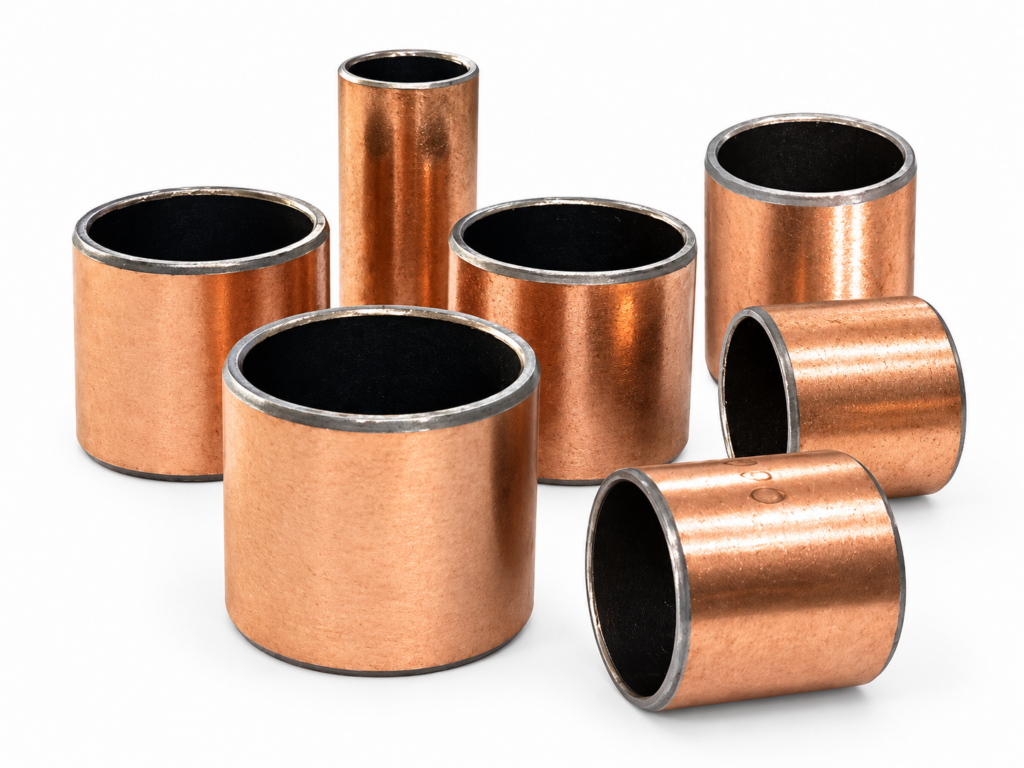
SF-1 metal-polymer sleeve bushings for cylindrical sliding interfaces. Specify the backing, sliding-layer formulation, outside finish and installed fit when ordering.
PTFE Composite Bushings for Oscillating Linkage Joints
For a linkage pivot, define how the pin moves within the sleeve. An oscillating-joint enquiry should include angular travel, cycle frequency, dwell, load direction and any shock or reversal. BONIU reviews SF-1 / DU-type metal-polymer sleeve requirements against the actual pin, housing and operating conditions.
Thin-wall sleeve fit
Provide pin and housing tolerances, shaft finish, required installed clearance and assembly method. The bore of a free thin-wall split sleeve alone does not establish its installed working clearance. Confirm the fit after installation and avoid machining or scraping the PTFE-based running layer without approval for the specified construction.
Lining, backing and exterior finish
The running layer, backing and exterior plating are separate specification items. State the required construction and copper- or tin-plated finish explicitly; plating colour does not identify the complete bearing system. Review temperature, contamination, lubricant compatibility and wear requirements before confirming the order.
For a metal-polymer linkage bushing quotation, send bore, outside diameter, length, quantity, drawing revision and the movement and load data. If a flange is required for axial location, compare our tin-plated SF-1-F flanged bushings and copper-plated SF-1-F flanged bushings. Any axial sliding duty at the flange requires a separate application review.
SF-1 / DU-Type Composite Sleeve Bushings
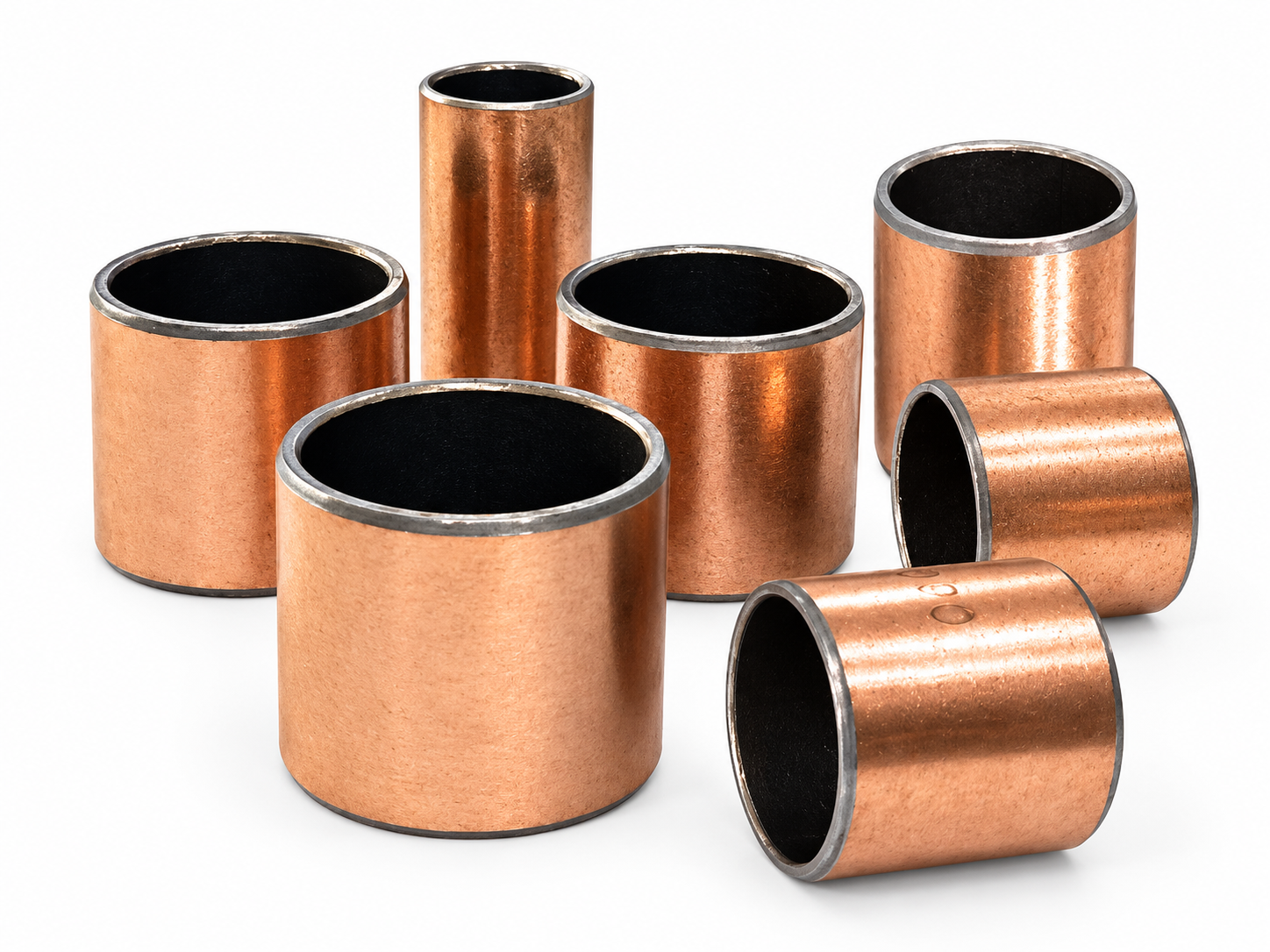
This product covers the straight, split-sleeve form shown in the photographs. The metal backing and polymer bearing surface must be specified together with the bore, outside diameter and length. The visible seam is part of the wrapped sleeve construction and should not be interpreted as a shaft-access opening.
“DU-type” is a search and product-family description here; no original-brand supply, certification or automatic interchangeability is claimed. Compare the approved specification before replacing another supplier’s bushing.
Backing, sliding surface and outside finish
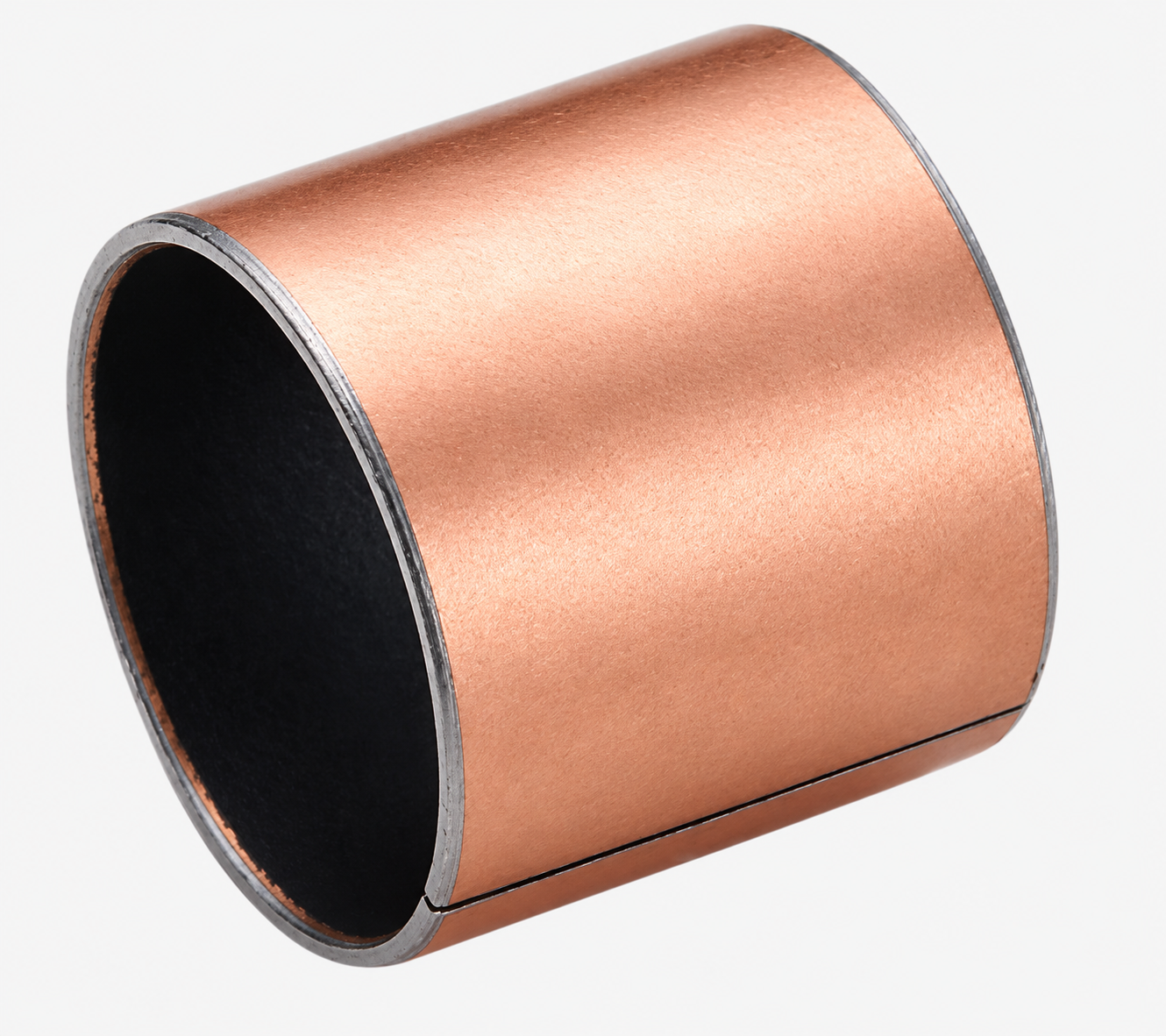
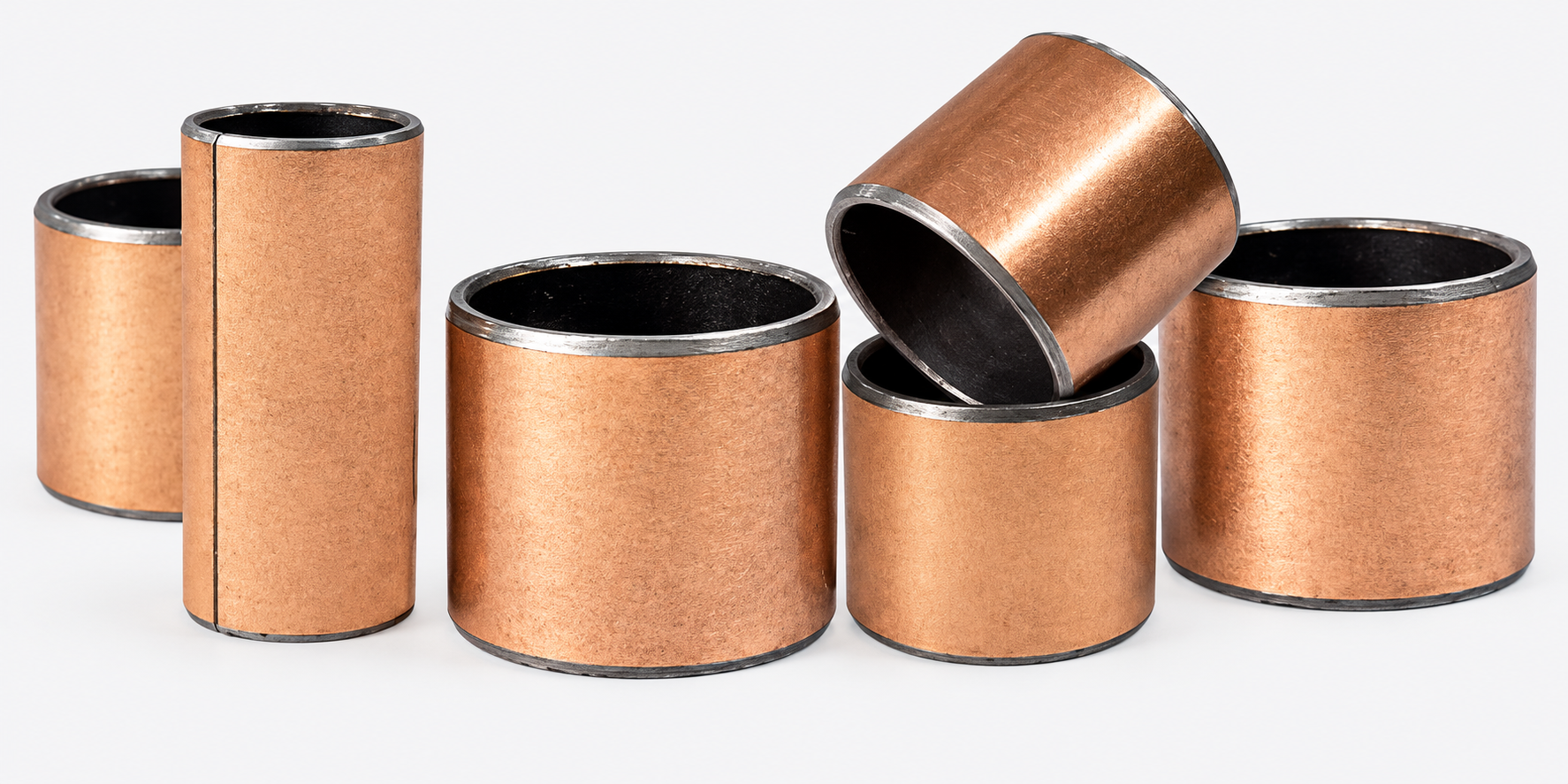
Confirm the backing material, intermediate layer and PTFE-based sliding formulation on the product specification. The appearance of a copper-coloured outside surface does not establish the backing material or the full construction. State any copper plating, tin plating or other surface-treatment requirement explicitly.
Dry-running suitability, initial lubrication, fluid compatibility and inspection intervals are reviewed for the selected formulation and operating conditions. Do not assume that all SF-1-labelled materials have identical properties or composition.
Dimensions and quotation checklist
| Item | Information to provide |
|---|---|
| Sleeve size | Inside diameter, outside diameter, length, units and tolerances |
| Bearing material | Backing, intermediate layer, sliding-layer formulation and outside finish |
| Mating parts | Housing and shaft dimensions, materials, surface finish and installed running clearance |
| Operating duty | Load, speed, movement, temperature, fluids, contamination and lubrication conditions |
| Supply requirements | Drawing revision, quantity, inspection documents and delivery requirements |
Confirm the installed dimensions rather than relying only on loose-part measurements. Final fits and acceptance criteria follow the approved drawing and bearing specification.
Installation and operating checks
- Inspect the sleeve, shaft and housing. Remove burrs and contamination without damaging the polymer sliding layer.
- Confirm the installation direction and seam orientation required by the assembly drawing.
- Use aligned installation tooling and the specified housing fit. Protect the edges and avoid hammering directly on the sleeve.
- Check the installed bore, alignment and running clearance before operation. Do not ream, scrape or grind the sliding layer without approval.
- Follow the agreed lubrication and commissioning procedure, then monitor movement, temperature and wear.
Frequently asked questions
Is the copper-coloured outer surface solid copper?
Appearance alone does not establish the backing. Confirm the backing and plating from the material specification.
Is a DU-type bushing automatically interchangeable with a branded DU bearing?
No. Compare dimensions, material construction, sliding formulation and application requirements before approval.
Can these bushings run without grease?
Confirm suitability for the actual load, motion, speed, temperature and selected formulation. Follow the agreed commissioning procedure.
Can I machine the inside after installation?
Do not remove or alter the sliding layer unless the product specification explicitly permits it.
Can I order other sizes or finishes?
Send your drawing, required material system, outside finish and quantity for manufacturing review.
Request an SF-1 bushing quotation
Email your drawing and operating conditions to sales@boniubushing.com or contact BONIU on WhatsApp. Material, tolerances, inspection scope and lead time are confirmed during quotation.
For flanged sleeves and washers, visit the Composite Bushings overview.