
Graphite Wear Plates for Telescopic Crane-Boom Slides
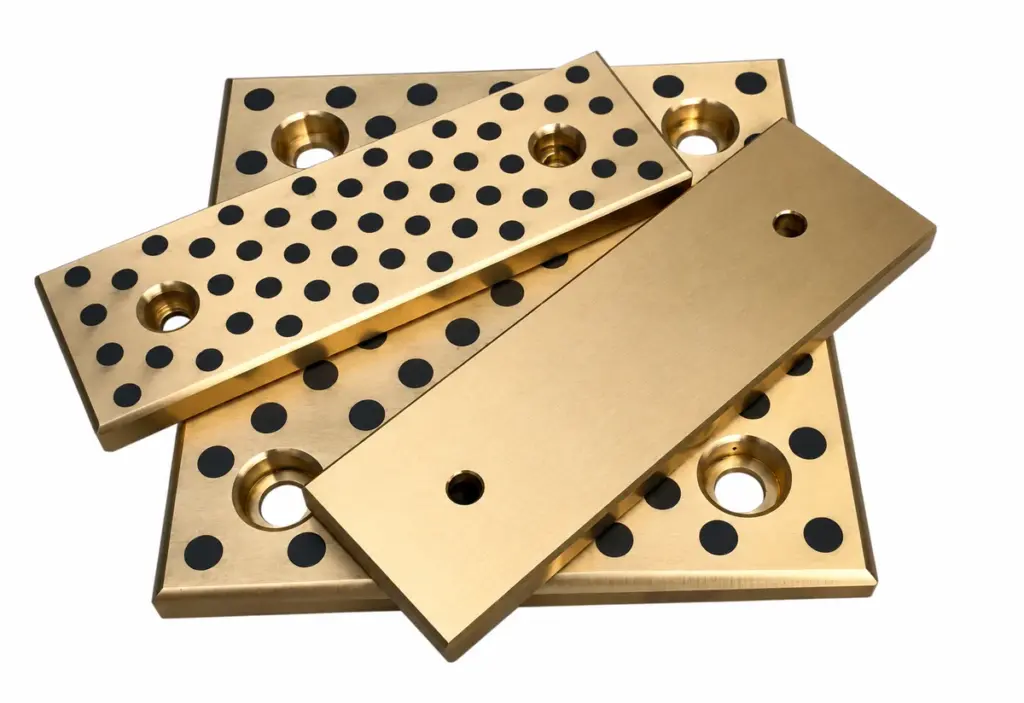
Telescopic crane boom wear plates provide a drawing-defined sliding contact between boom sections where the equipment design specifies a metallic wear plate. BONIU graphite-plugged plate construction can be reviewed for that interface. Plate position, shim adjustment and the boom load path must be established before selecting material.
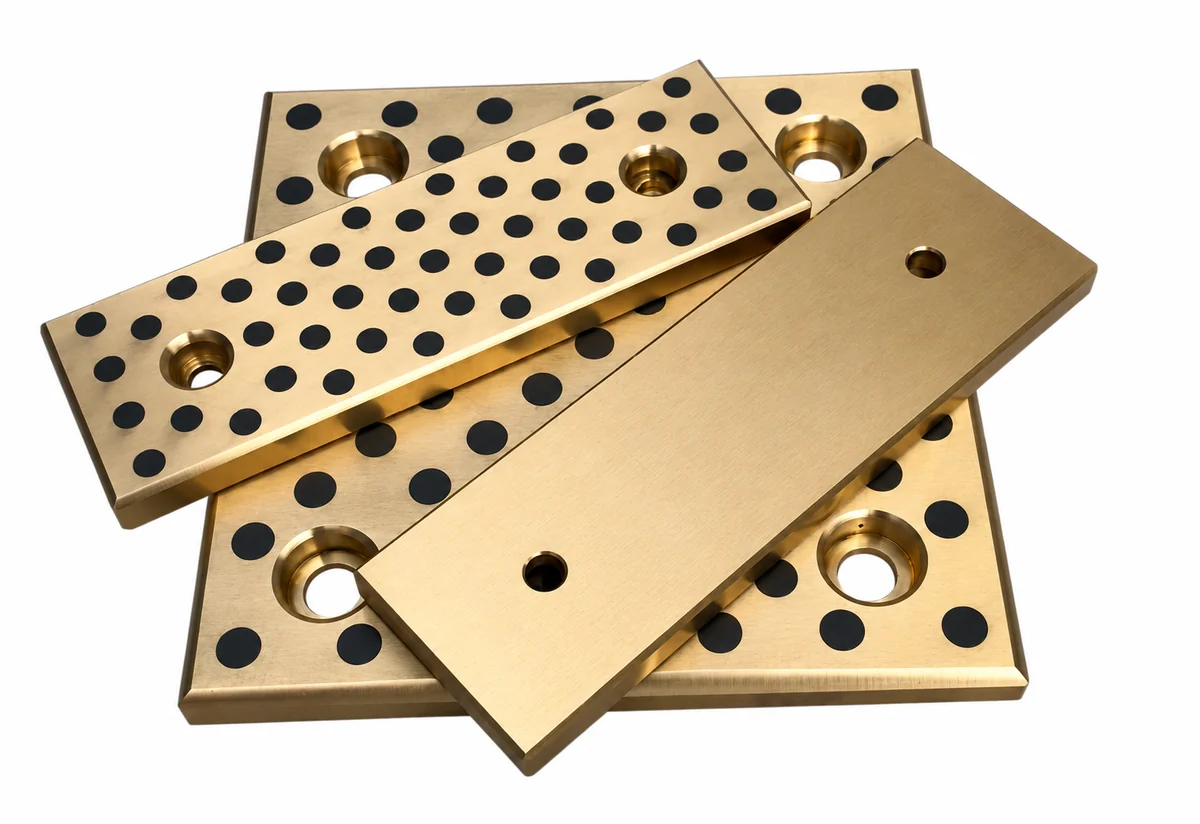
Locate each plate in the boom support and adjustment system
Upper, lower and lateral pads can experience different reactions as boom extension and elevation change. Minimum overlap, local support and bending of the boom section affect the contact distribution. A metallic graphite plate is not automatically a replacement for a polymer pad: changing friction, stiffness or pad thickness can affect telescoping behaviour.
Start with the matching BONIU product construction. Send the assembly section as well as the individual bearing drawing so that the working contact, locating surfaces and installation access can be reviewed together.
Dimensions and operating data for quotation
| Review item | Required information |
|---|---|
| Plate layout | Upper/lower/side location, contact footprint, section overlap and reaction at critical boom positions. |
| Mounting and adjustment | Length, width, thickness, fixing holes, backing support, shim stack and replacement access. |
| Working interface | Counterface material, finish, lubrication, telescoping speed, debris and weather exposure. |
| Purchase specification | Drawing revision, quantity, units, exact material or composite specification, finish, inspection-document requirements and delivery destination. |
Selection boundaries and installation
Keep the backing face fully supported and reproduce the approved pad thickness and shim arrangement. Check fastener clearance over the moving track. Inspect the counterface for scoring and verify the specified boom-section clearances after installation. Do not change a pad material or adjustment procedure without the equipment design review.
Material and replacement approval
For copper-alloy parts, state the exact standard and grade required by the design. JDB/500# and geometry codes do not establish chemical composition. Do not treat different national alloy designations as interchangeable without checking their specifications. Product colour and a reused image cannot confirm material. Required documentation, dimensions and manufacturing scope are reviewed with the quotation.
Agree the material, counterface, operating clearance and acceptance criteria before approving a replacement. Include any required dimensional inspection, material documentation or sample review with the RFQ so it can be addressed in the quotation.
Purchasing questions
Are top and side boom pads interchangeable?
Not necessarily. Location changes load direction, adjustment and the required contact area. Label each drawing position.
Can graphite bronze replace a nylon pad of the same size?
Only after friction, stiffness, counterface, clearance and equipment requirements have been reviewed.
What should accompany a replacement RFQ?
Provide the boom assembly section, plate position, dimensions, mounting, shims and duty; identify the original material if known.
Can the original product image be used to approve this application?
No. It illustrates the bearing structure. Use the approved part and assembly drawings to confirm dimensions, material, clearance and duty.
Request an application-specific quotation
Send your drawing and the checklist above through the BONIU enquiry page. Identify any proposed substitution explicitly so it can be reviewed before order confirmation.
Related products and engineering content
Base product and construction · Material selection · Related machinery applications · Related technical reading · Product catalogue
Application reference: OILES construction-equipment application overview. This reference supports the general mechanism or selection principle; its product ratings and approvals are not BONIU specifications.