
JDBS Spherical Plain Bearings — Steel Outer Ring, Copper-Alloy Inner Ring
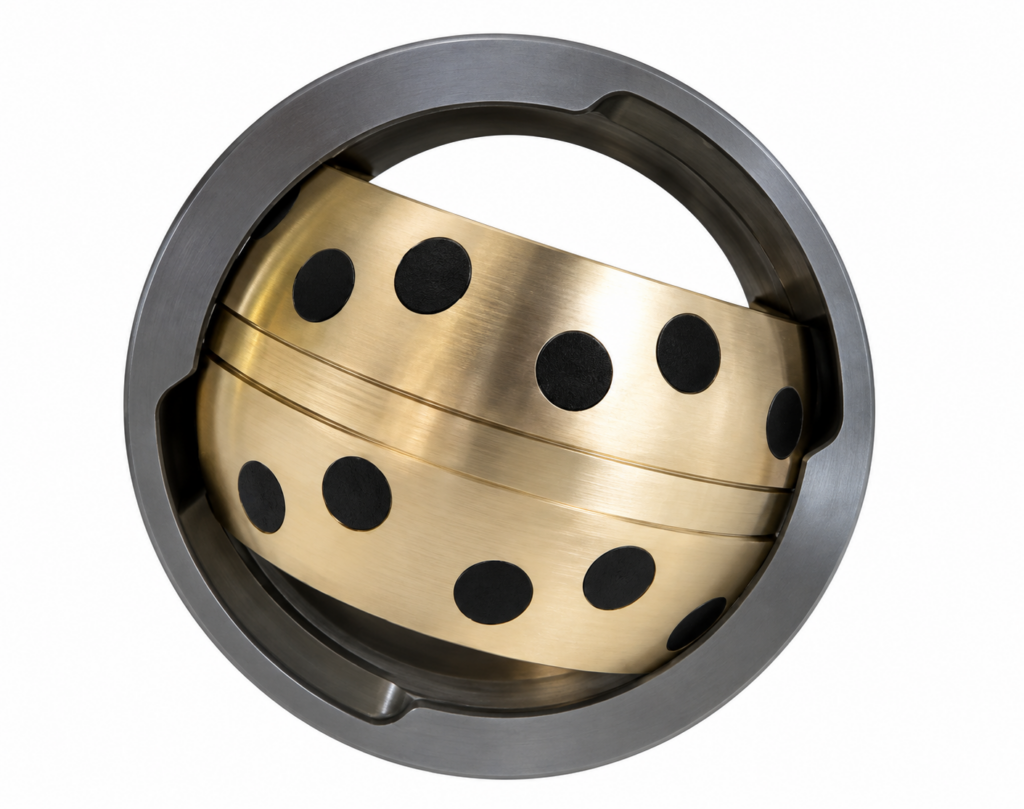
BONIU supplies JDBS spherical plain bearings with a steel outer ring and a graphite-plugged copper-alloy inner ring. The spherical sliding interface is intended for articulated joints requiring angular movement. Send your drawing, load and motion requirements so we can confirm the bearing dimensions, materials and installation arrangement.
JDBS Spherical Plain Bearings
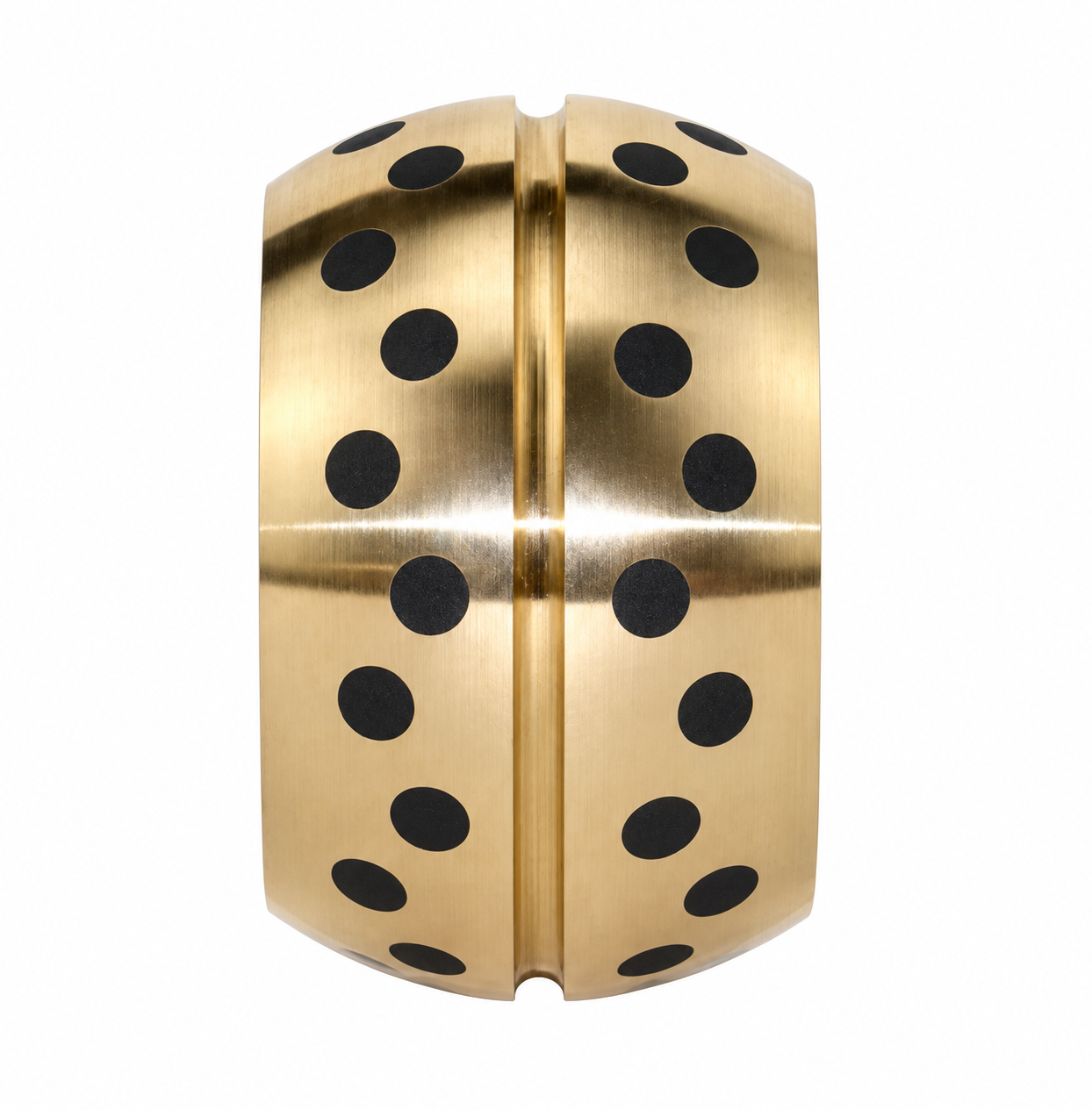
The bearing has a spherical sliding contact between its inner and outer members. This geometry allows the inner ring to articulate relative to the outer ring within the clearance provided by the bearing and surrounding assembly. Confirm the required tilt angle, oscillation and operating envelope from the actual installation.
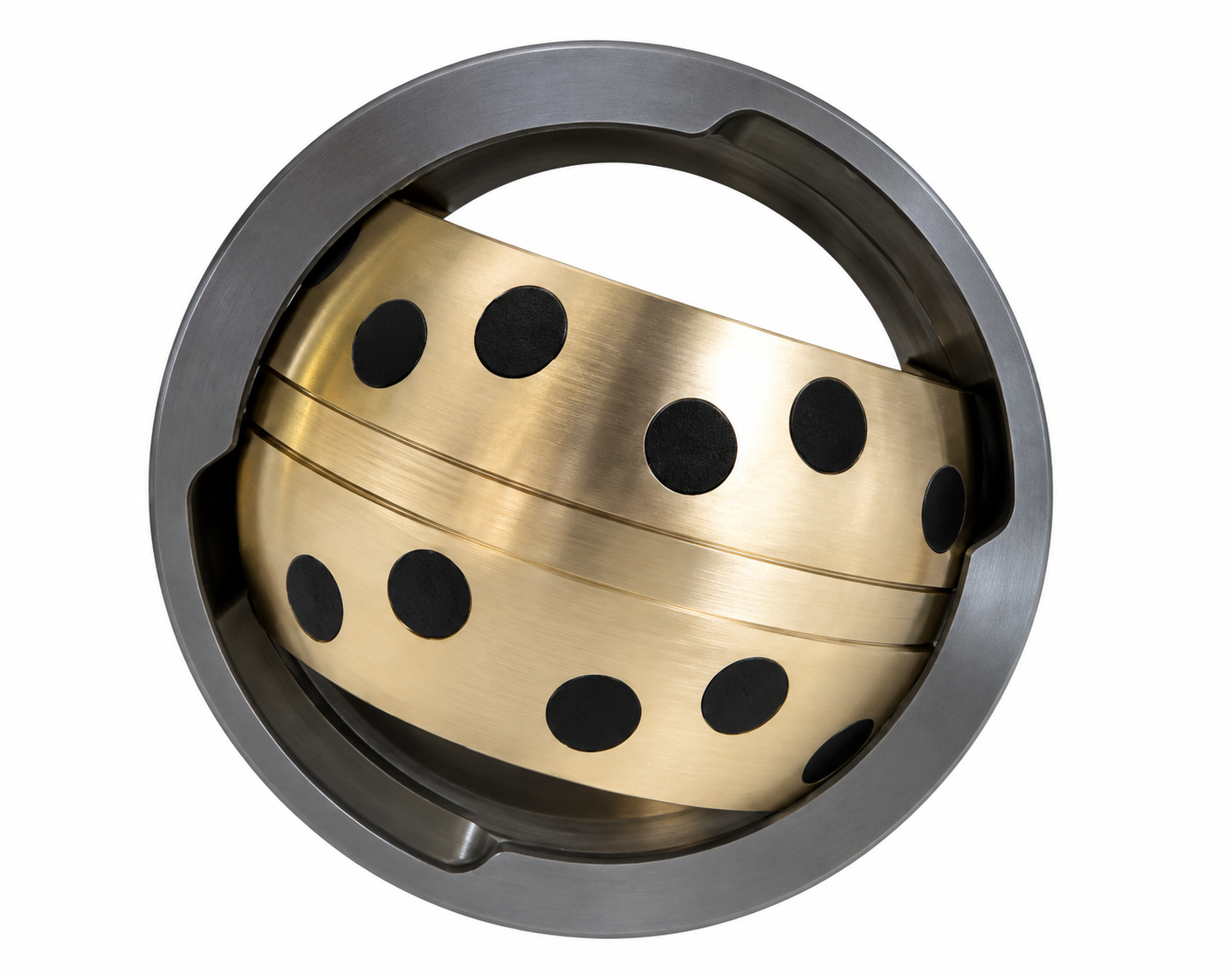
Potential enquiries include pivots, linkages and machinery joints where angular motion must be accommodated. Bearing selection depends on the direction and magnitude of the load, motion, speed, duty cycle and environment. The product photographs do not establish a permissible load, speed or articulation angle.
Steel Outer Ring and Graphite-Plugged Copper-Alloy Inner Ring
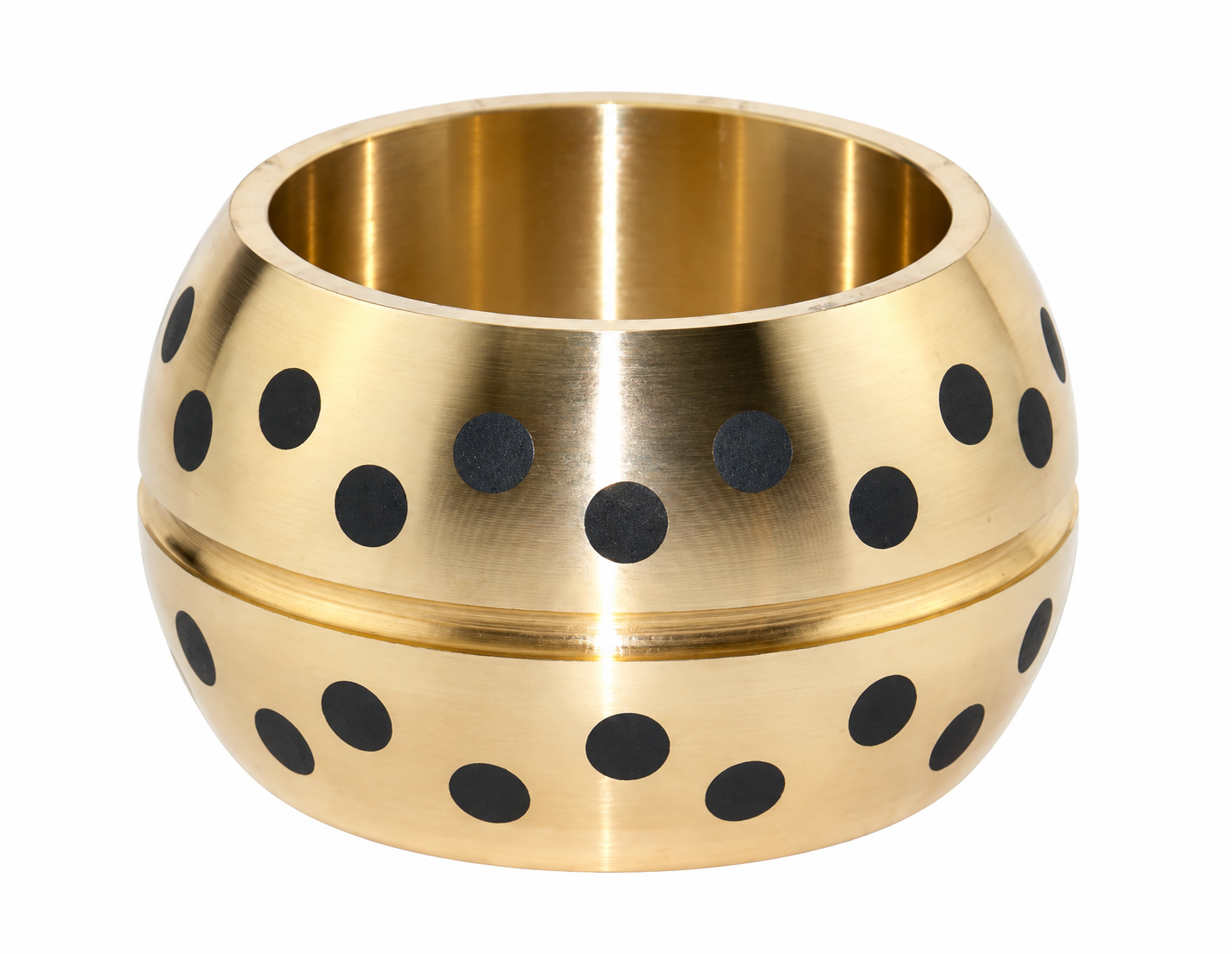
The supplied construction uses a steel outer ring around a copper-alloy spherical inner ring. Embedded graphite plugs are visible on the spherical surface of the inner ring. Confirm the exact steel and copper-alloy grades, surface requirements and graphite specification against the agreed order drawing.
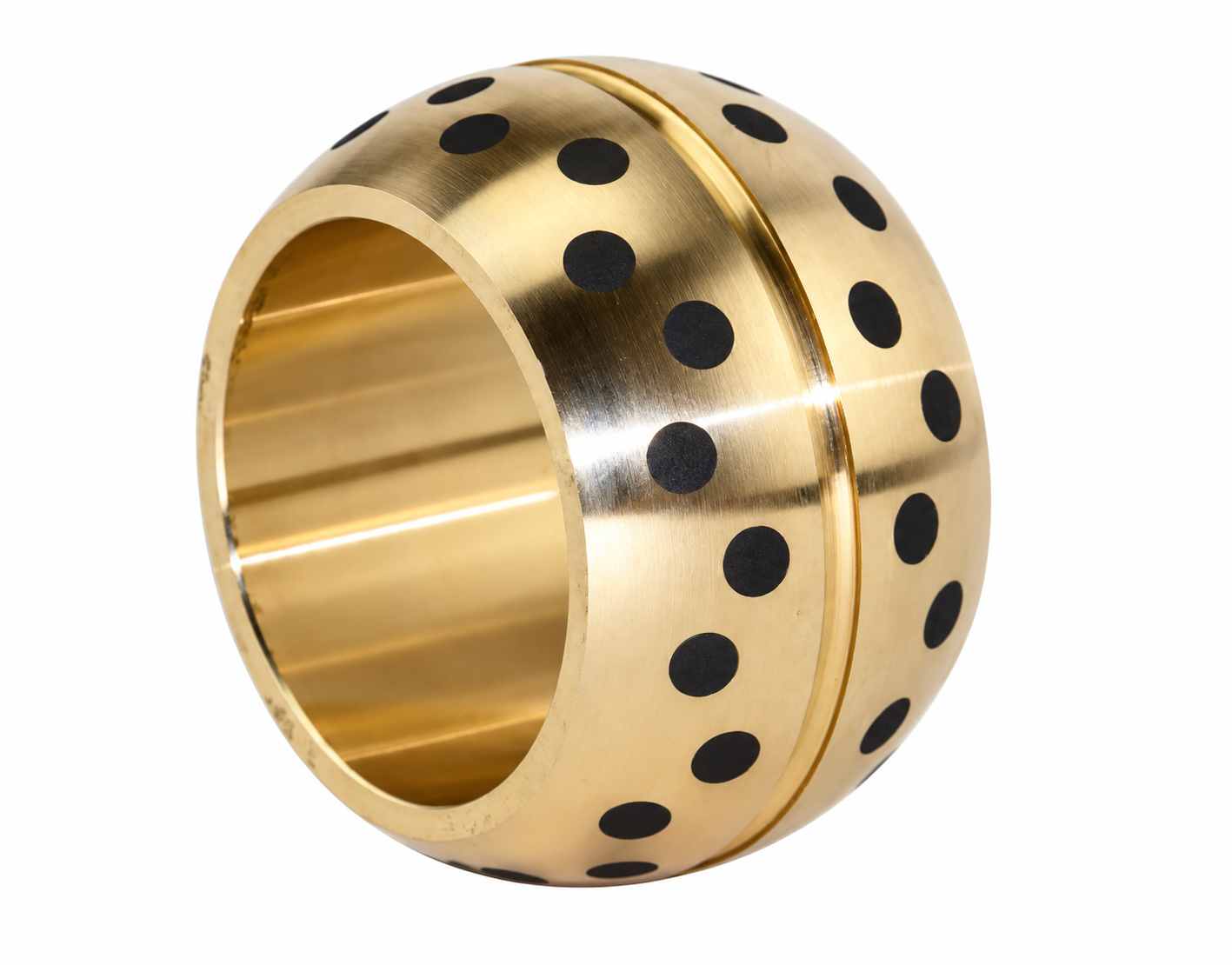
The metal components support the specified load, while the embedded graphite supplies solid lubrication at the intended sliding interface. This construction should be reviewed as a spherical plain bearing assembly. Its fit, clearance and articulation requirements differ from those of a straight cylindrical sleeve.
Self-lubricating construction does not by itself determine the maintenance or lubrication plan. Confirm running-in, any additional lubrication, contamination protection and inspection requirements for the specific service conditions.
Dimensions and Application Data for Quotation
Send a drawing or the following information. Identify the shaft and housing datums, retention arrangement and required movement so the complete joint can be reviewed.
| Requirement | Information to provide |
|---|---|
| Main dimensions | Bore, outer diameter, inner-ring width, outer-ring width and relevant shoulder or chamfer dimensions. |
| Angular movement | Required tilt angle, oscillation amplitude, movement directions and surrounding clearance. |
| Load and duty | Radial and axial load components, load direction, shock loading, speed and duty cycle. |
| Fits and retention | Shaft and housing dimensions and tolerances, shoulder positions, spacers and retaining features. |
| Materials | Steel outer-ring grade, copper-alloy inner-ring grade, graphite specification and surface requirements. |
| Environment | Temperature, water, dust, chemicals, sealing arrangement and lubrication requirements. |
| Order details | Quantity, drawing revision, inspection requirements, packaging and destination. |
JDBS is the requested product designation. Confirm interchangeability with an existing bearing by comparing the complete drawing, materials, installed clearance and application requirements.
For cylindrical bearing geometries, browse our graphite-plugged bushings or the full product catalogue.
Installation and Articulation Clearance
Clean and deburr the shaft, housing and locating shoulders before assembly. Use suitable tooling to apply installation force to the ring being fitted. Avoid transmitting press-fit force through the spherical sliding interface or striking the graphite plugs.
Follow the approved drawing for shaft and housing fits, ring retention and installed clearance. Check that shoulders, spacers, seals and surrounding components permit the required angular movement. Verify movement through the intended operating envelope after assembly.
Do not assume that a bearing’s free movement before installation confirms its final installed condition. Fit, clamping and temperature can affect the working clearance. Review alignment, contamination protection and lubrication requirements before service, and inspect the bearing according to the agreed maintenance plan.
Frequently Asked Questions
What does steel outer and copper-alloy inner mean?
The outer ring is steel, and the spherical inner ring is copper alloy with embedded graphite plugs in the supplied construction. Exact grades and treatment requirements are confirmed with the order.
What is the purpose of the spherical sliding interface?
It permits angular articulation between the inner and outer members within the bearing and assembly’s available movement. Confirm the required angle and load conditions for selection.
Is this a ball bearing with rolling balls?
No. This is a spherical plain bearing with sliding contact between mating spherical surfaces.
Can it operate without added grease?
That depends on the approved bearing specification and application. Send the load, motion, temperature and environment so the lubrication and maintenance requirements can be confirmed.
Can BONIU quote a replacement from a sample?
Provide sample dimensions or a drawing, quantity and working conditions. Include the required articulation, shaft and housing fits, and retention details for review.
Request a JDBS Bearing Quote
Send your drawing, quantity, load conditions and required angular movement. BONIU will confirm the steel outer-ring and graphite-plugged copper-alloy inner-ring construction for your order.
Articulated joints: specify the assembly’s angular envelope
JDBS has a steel outer ring and a graphite-plugged copper-alloy spherical inner member. Enquiries should identify whether the joint rocks repeatedly, changes alignment during travel or rotates, because the duty cycle and contact motion differ. An assembly’s usable angular travel can be limited by spacers, shoulders or clevis geometry before the bearing reaches its geometric limit.
| Drawing review | Information for quotation |
|---|---|
| Angular motion | Give travel to each side, oscillation frequency and a section showing clevis, spacers and shoulders. |
| Ring interfaces | Dimension bore, outside diameter, inner and outer ring widths, fits and axial retention. |
| Joint loading | State force directions, reversals, impacts, temperature, contamination and lubrication plan. |
Installation and operating boundaries
Apply fitting force to the ring that is being fitted, with appropriate support; do not transmit pressing force across the spherical sliding contact. The spacer and pin arrangement must leave the intended articulation free. No universal permissible angle, speed or load is assigned to the JDBS designation.
Include the drawing revision, quantity, required delivery destination and inspection-document requirements. Photographs show geometry; they do not establish an alloy grade, coating test result or service rating. BONIU reviews the requested specification before confirming the quotation.
Purchasing questions
Can the bearing correct any shaft misalignment?
No. Confirm the actual assembly envelope and allowable loaded movement for the selected geometry.
Is this interchangeable with a steel-on-PTFE spherical bearing?
Not by designation or dimensions alone. Sliding material, clearance, lubrication, fit and duty must all be reviewed.
Does a spacer only affect axial position?
It can also change shoulder clearance and the usable angular movement. Include it in the assembly drawing.
Related selection routes
MPGZ / OFP01 Graphite-Plugged Bronze Flanged Thrust Bushings; bearing materials; automation guidance applications; Material and bearing selection guides.
Engineering reference: NHBB: spherical-bearing misalignment geometry. This describes the geometric review principle; its ratings do not define BONIU product limits.
Request a drawing-based quotation
Send the interface drawing and operating details through our enquiry page. Identify the required material by its exact standard and grade; proposed alternatives require approval.