
CuZn25Al5Mn4Fe3 Recessed H-Flange Bushings for PCB Fixture Lifts
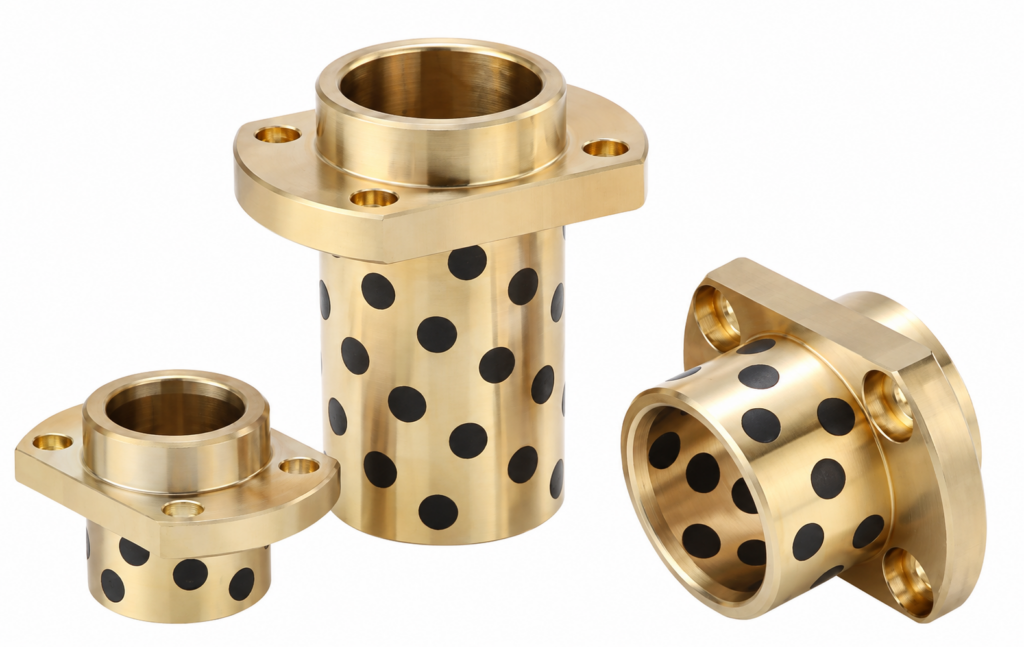
For a PCB depaneling fixture with a vertically lifting support plate, request a CuZn25Al5Mn4Fe3 graphite guide bushing with the MPITZ / OFR12 recessed H-flange arrangement. The purchasing problem is a compact guide installation that leaves adjacent fixture space clear while maintaining the specified guide axis.
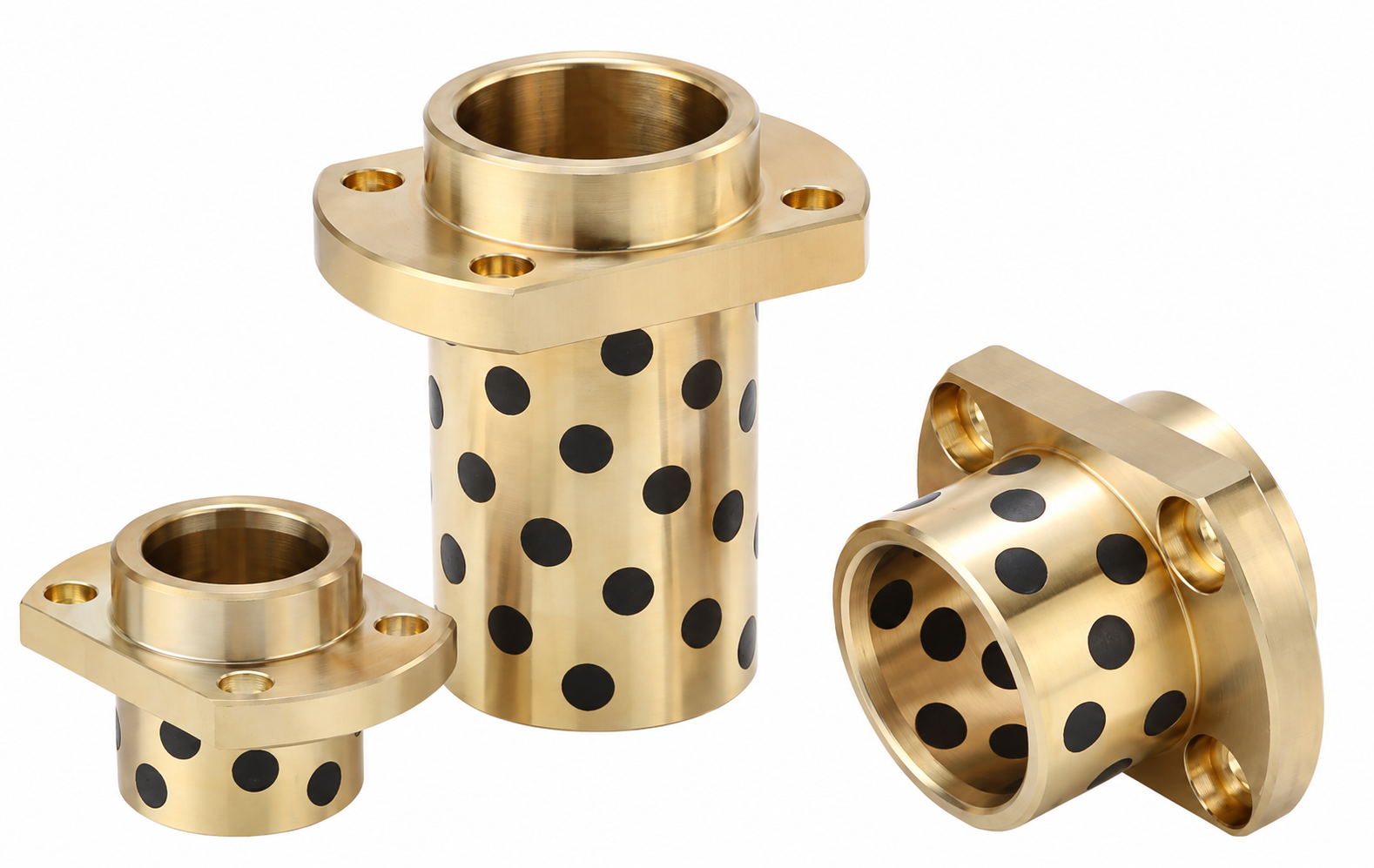
Use the pocket datum to control the guide installation
Show the flange pocket, its depth and the plate face used as the assembly datum. Identify whether the flange must sit below, flush with or proud of that face. The H outline can provide clearance around neighbouring features, but it does not determine bolt spacing or guide alignment. Give the guide-post spacing and plate stiffness so multiple sleeves do not become an over-constrained set.
The material request is high-tensile brass CuZn25Al5Mn4Fe3 with a defined graphite system. Confirm bore coverage, sleeve length and any initial lubrication requirements. This is a solid copper-alloy guide, not a steel-housed linear ball bearing. Graphite is a solid-lubricant feature; its presence does not certify electrical conductivity, grounding performance or compatibility with an electronics process.
Application boundaries to confirm
Provide depaneling dust extraction, guide shielding, stroke and lift force. The bearing should not be described as ESD safe or cleanroom compatible without the relevant requirements and validation. If the support plate must meet a process-level positional tolerance, review post deflection, fixture datums and the complete tolerance stack.
Dimensions and drawing-based quotation checklist
| Review item | Information required |
|---|---|
| Recess geometry | Pocket depth, H-flange flat spacing, corner clearance and retaining-hole coordinates. |
| Guide geometry | Bore, body OD, length, post spacing, alignment datum and installed fit. |
| Fixture travel | Lift stroke, cycle frequency, load offset and minimum post engagement. |
| Material and procurement | CuZn25Al5Mn4Fe3 standard, graphite layout, dust protection, quantity and inspection plan. |
Send a dimensioned new-part drawing with units and revision, the mating-part dimensions and requested inspection documents. A worn sample is useful supporting evidence but may not preserve the original fit.
Installation and selection checks
Deburr the pocket without changing its seating depth. Seat each flange on its intended face and tighten with the specified support. Check the assembled guides with the plate throughout its stroke before connecting the drive. Ensure extraction hoses and fasteners do not enter the guide-post travel envelope.
Frequently asked questions
Can the H flange be treated as a round flange with two sides removed?
Use the actual pocket and hole drawing. Relief geometry, seating area and bolt clearances must be checked.
Does graphite prove ESD suitability?
No. Electrical and process requirements need their own specification and validation.
Should all guide bores have the same tight fit?
Use the fixture designer’s datum and clearance plan. An unnecessarily constrained multi-post arrangement can bind.
Request a custom replacement quotation
Send your drawing to BONIU with the CuZn25Al5Mn4Fe3 high-tensile brass requirement, quantity and operating data. We review the specified material route, dimensions and inspection requirements before confirming the quotation.