
Graphite-Plugged Bronze Wear Plates & Slide Plates
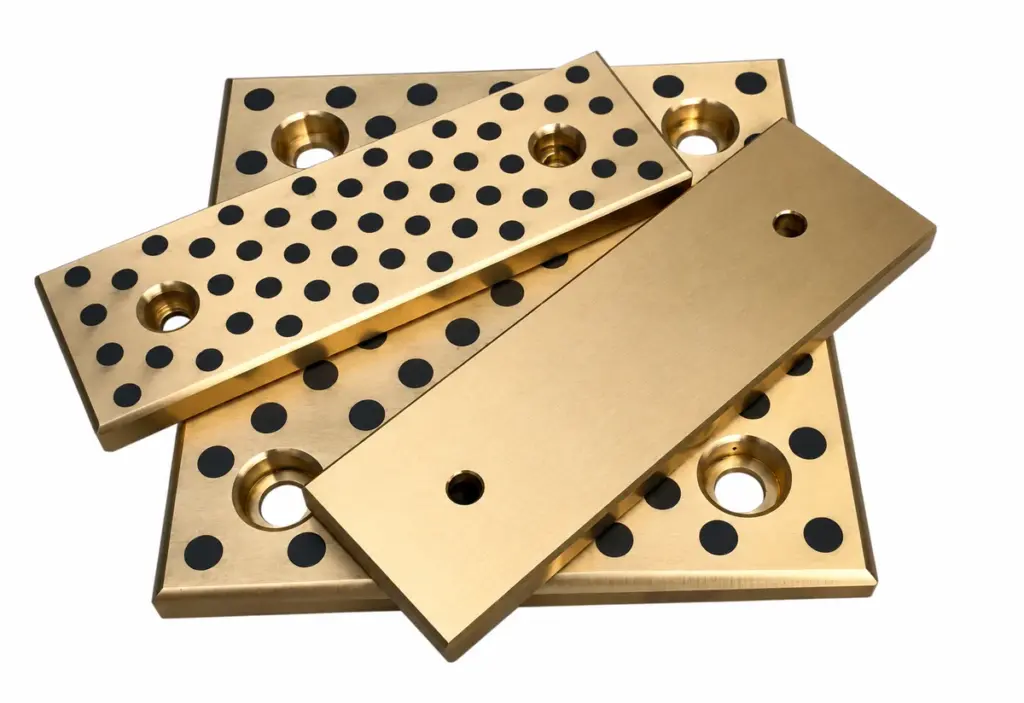
Graphite-plugged bronze wear plates and self-lubricating copper-alloy slide plates for flat guide surfaces. Custom plate dimensions, mounting holes and lubricant layout to an approved drawing.
Bronze Wear Plates for Stamping Die Slides
For stamping tooling, define the sliding member, load path and working face before selecting a graphite bronze guide plate. Enquiries may concern a die slide, cam guide or replaceable wear surface. BONIU reviews the actual drawing and press duty rather than assigning the same bearing specification to every die assembly.
Contact area, support and motion
Provide the load acting on the plate, stroke, cycle rate, dwell, impact conditions and mating material. Identify which surface carries sliding contact and how the plate is supported from behind. Confirm flatness, thickness tolerance, edge relief and installed clearance. Uneven support or misalignment can concentrate contact near an edge even where the nominal plate area is large.
Alloy and graphite pattern
State the required copper alloy and graphite specification. A high-tensile brass drawing requirement and a tin-bronze requirement should be quoted as separate material specifications. Confirm the relevant certificates and inspection criteria with the quotation. Plug layout must accommodate the fixing holes and intended sliding path.
For a custom self-lubricating die slide plate quote, send the plate drawing, working face, hole coordinates, quantity and operating conditions. Our countersunk slide plates provide a related fixing arrangement. Where the mechanism instead uses a cylindrical guide pin, review our graphite-plugged guide bushings.
Graphite-plugged bronze wear plates
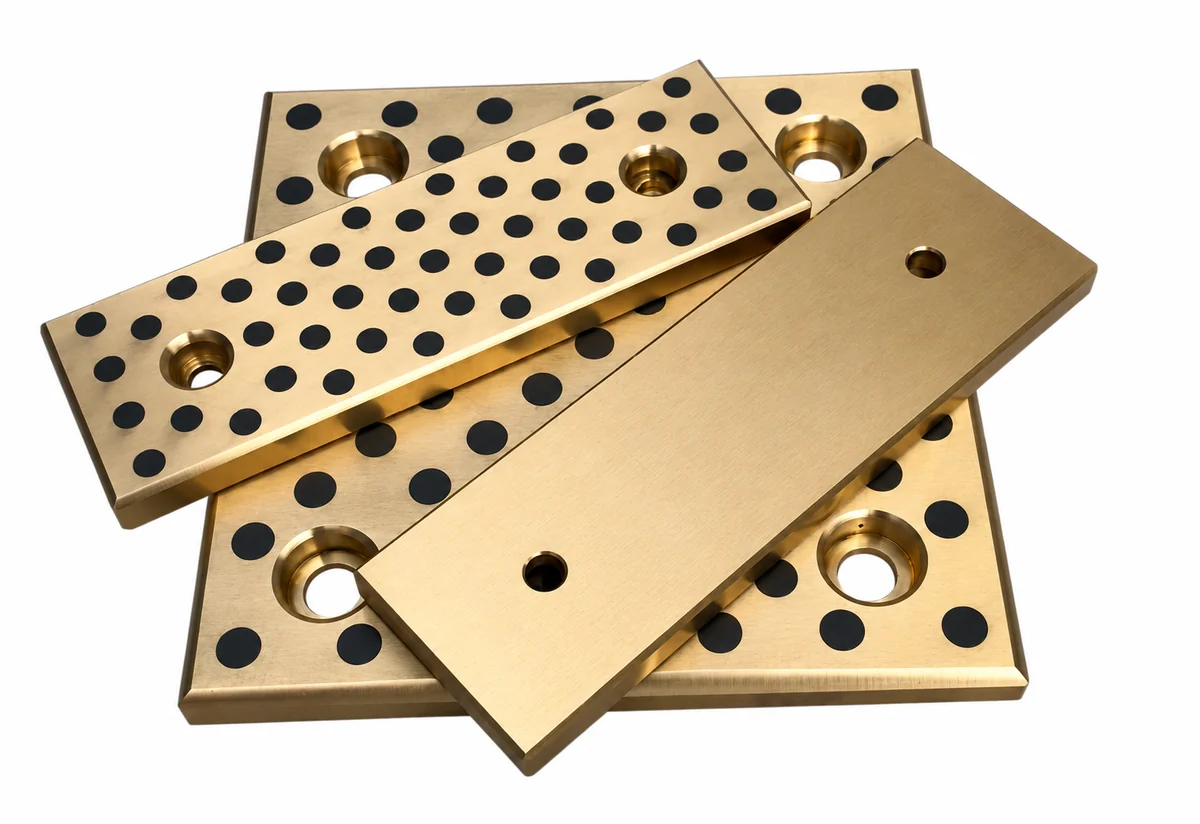
BONIU graphite-plugged bronze wear plates combine a copper-alloy bearing plate with embedded solid-lubricant plugs on the specified working face. Also called bronze slide plates or self-lubricating wear strips, these flat sliding elements are made to fit the available mounting space and the mating guide surface.
The photographs show rectangular plates with graphite plugs, fixing holes and recessed bolt seats. The smooth face shown on one plate must be identified on the drawing as a mounting face or a separate working face. Colour alone does not identify the alloy.
Working face, backing and mounting holes
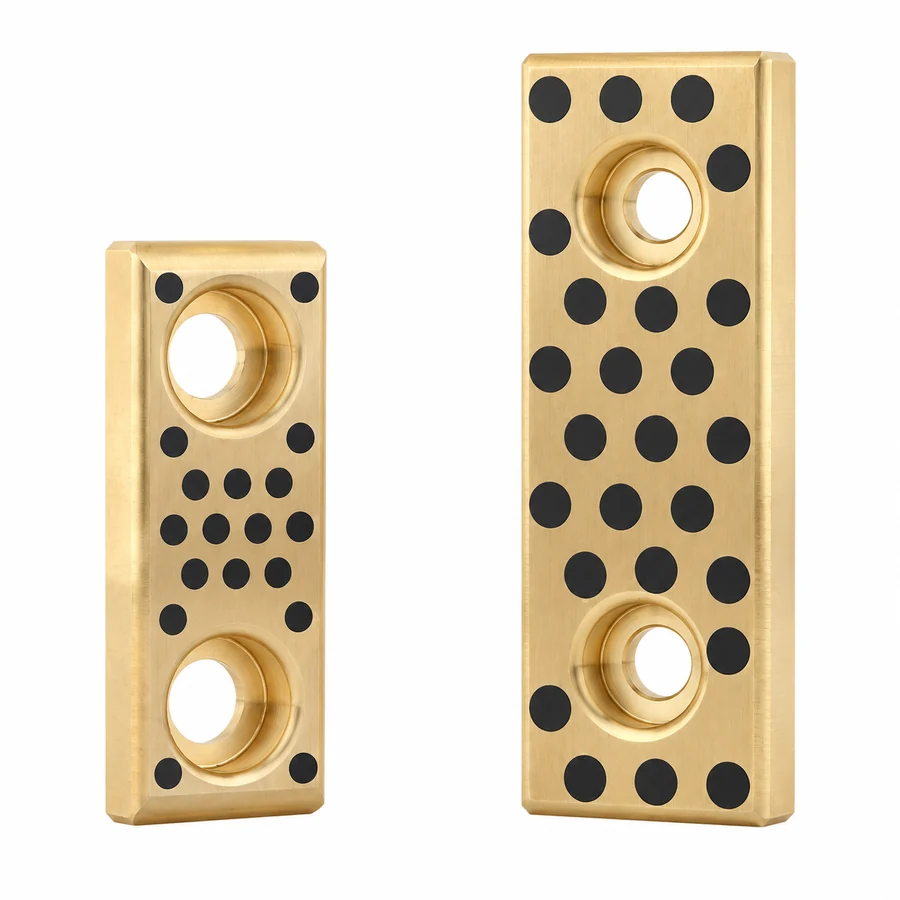
Define the sliding direction, travel and loaded contact area before choosing the graphite layout. Specify which face carries graphite and which face seats against the machine. Fixing holes and counterbores must be coordinated with the support and fasteners, so bolt heads remain clear of the moving counterface.
Use the grade and material standard required by the drawing. High-tensile brass and tin-bronze options should be reviewed separately; a commercial description such as “bronze graphite plate” does not establish chemical composition, hardness or interchangeability with a named catalogue product.
Dry-running suitability, commissioning lubricant and inspection intervals depend on the selected alloy, solid-lubricant system and operating conditions. Confirm these during drawing review.
Drawing and operating information
| Feature | Specify on the drawing |
|---|---|
| Plate envelope | Length, width, thickness, units and tolerances |
| Working surface | Sliding face, graphite coverage, travel direction, stroke and loaded contact area |
| Mounting | Hole coordinates, hole diameters, counterbore or countersink details, edge distances and locating features |
| Geometry | Flatness, parallelism, surface finish, chamfers and reference datums |
| Bearing pair | Counterface material, hardness, finish, running clearance and support arrangement |
| Operating duty | Peak and normal loads, speed, stroke, cycle frequency, temperature, contamination and lubrication access |
For a replacement plate, include the assembly drawing or mating part dimensions. Quotation should refer to the required new-part dimensions; a worn sample may no longer represent the original specification.
Slide and guide applications
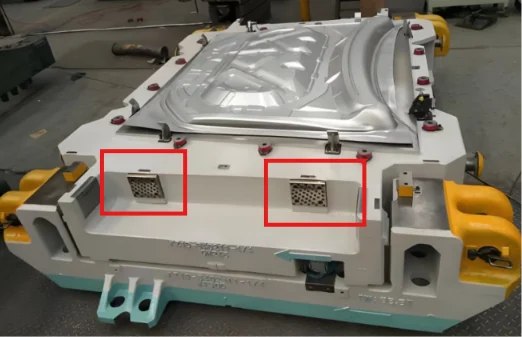
The supplied application image highlights wear plates on a stamping-die assembly. It is an application illustration, not a declaration that the illustrated tooling was manufactured or supplied by BONIU.
Potential uses include stamping-die guide faces, mould slide guides and replaceable machinery guide strips. Each application requires review of contact pressure, speed, stroke, support stiffness and alignment. Edge loading, abrasive contamination and shock loads must be considered rather than assuming suitability from the plate shape.
| Element | Selection focus |
|---|---|
| Graphite-plugged wear plate | Flat sliding interface, supported mounting face and defined graphite-bearing surface |
| Plain copper-alloy plate | Flat sliding interface with an independently specified lubrication arrangement |
| Graphite-plugged bushing | Cylindrical shaft or pivot bearing; specify bore and installed fit |
| Graphite thrust washer | Annular axial sliding contact; confirm axial load and retention |
Installation and first operation
- Verify the part number, drawing revision, dimensions and designated sliding face. Inspect graphite plugs and edges for damage.
- Clean the support and counterface. Remove burrs and contamination without changing the specified bearing finish.
- Check support flatness and plate seating. Use the specified locating arrangement; do not pull a distorted plate flat by excessive bolt tightening.
- Install the approved fasteners and confirm that all heads remain below the required clearance plane. Tightening torque follows the fastener and assembly specification.
- Check running clearance, alignment and free movement over the full stroke. Apply the agreed commissioning lubricant where specified.
- Run the mechanism under the approved commissioning conditions and inspect for abnormal heat, scoring, noise or uneven contact.
Do not drill, grind or relocate graphite plugs without approval. Modification can change the working surface and mounting strength.
Frequently asked questions
Are these solid graphite plates?
No. The products shown are copper-alloy plates with embedded graphite plugs. Specify both the metal grade and solid-lubricant system.
Does self-lubricating mean no inspection is required?
No. Lubrication and inspection requirements must be confirmed for the actual operating duty and environment.
Can the mounting hole pattern be customised?
Send hole coordinates, datums, recessed seat dimensions and fastener details with the plate envelope for manufacturing review.
Can I replace another supplier’s wear plate directly?
Provide the reference drawing and operating conditions. Dimensions alone do not establish equivalent material, graphite formulation or performance.
Do both faces contain graphite?
Only the specified working faces should be assumed to contain graphite. Confirm the plug layout and mounting face on the approved drawing.
Request a quotation
Send your drawing, quantity and service conditions to sales@boniubushing.com or contact BONIU on WhatsApp. Include the plate envelope, alloy and standard, hole pattern, graphite-bearing face, mating surface and delivery requirements.
Final material, tolerances, inspection documents and lead time are confirmed during quotation.
Related products: graphite-plugged bushings and graphite thrust washers. See the material composition guide when preparing the alloy specification.