
H62 Brass Flanged Bushings for Printing Register Levers
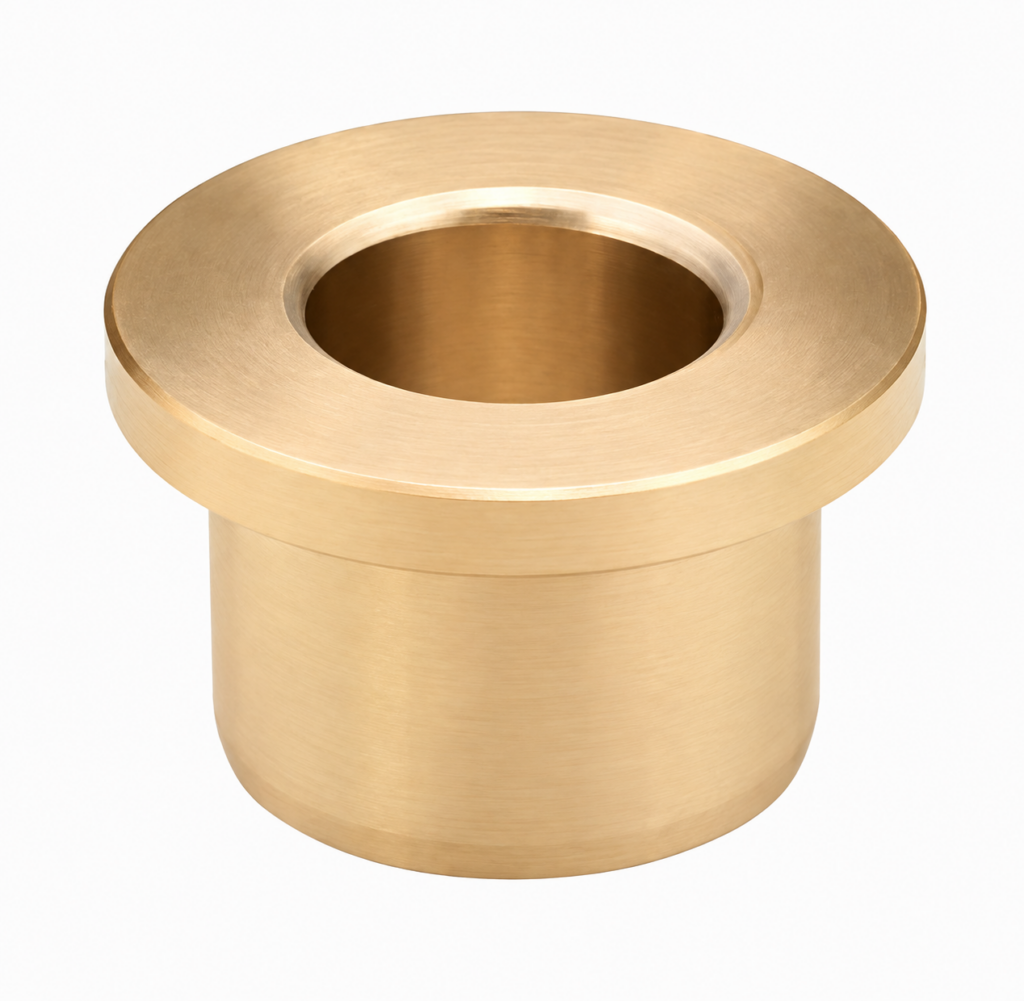
Submit an H62 brass flanged bushing enquiry for a printing machine’s register-adjustment lever pivot. The purpose is to replace a drawing-defined sliding pivot and control its radial and side clearances. This component is separate from the rotating print-cylinder bearing and does not by itself determine registration accuracy.
Distinguish bore play from lever-stack movement
A register lever may feel loose because the pin-to-bore fit has worn, because the flange face has thinned, or because the pin is moving in its support. Inspect each interface before assigning a repair dimension. Show the lever thickness, pin shoulders and adjoining washers. Specify whether the flange rotates against a cheek, remains stationary, or only locates the sleeve against the lever housing.
H62 is an ordinary copper-zinc brass grade, not a generic name for every yellow bearing alloy. Quote it with its governing standard, stock condition and required acceptance criteria. It is a separate material from H59 and from graphite-plugged high-tensile brass. For a solid H62 sleeve, the drawing must define the lubricant and bearing pair; a smooth bore and integral flange do not provide a maintenance-free claim.
Cleaning exposure and adjustment force need review
Provide the adjustment angle, frequency, expected hand or actuator force and any vibration from nearby drives. List the cleaners, ink mist and moisture that can reach the pivot, rather than treating all printing-machine locations alike. Lubrication must suit the machine’s cleanliness requirements and protect the actual rubbing surfaces. Where backlash originates in gears or screw threads, changing a pivot bushing cannot remove it.
Drawing and quotation checklist
Send a dimensioned new-part drawing with units and revision, the mating assembly and the following application details.
| Review item | Information to provide |
|---|---|
| Radial bearing | Bore, body OD/length, shaft size, housing fit and installed running clearance. |
| Flange function | Flange OD/thickness, rubbing face, root radius, shoulder relief and side-clearance stack. |
| Material requirement | H62 standard/edition, approved stock form, condition and any restricted-substance requirements. |
| Lever service | Force and moment arm, angular travel, adjustment frequency, vibration, lubricant and cleaning media. |
| Order and inspection | New-part drawing/revision, quantity, datum scheme and bore/flange inspection criteria. |
Installation and selection checks
Inspect pin straightness and supporting holes before renewing the sleeve. Fit with controlled alignment and avoid loading the unsupported flange edge. Measure bore clearance after installation, then assemble the full lever stack and check side movement with the pin fastener secured. Move the lever through the complete register range and confirm its stops and lock remain effective. Lubricate according to the approved maintenance plan.
Frequently asked questions
Can I remove all side clearance to improve registration?
Use the designed clearance. Clamping a moving lever between its shoulder and flange can cause binding; the required stack-up must account for the actual mechanism.
Does the photograph prove H62 material?
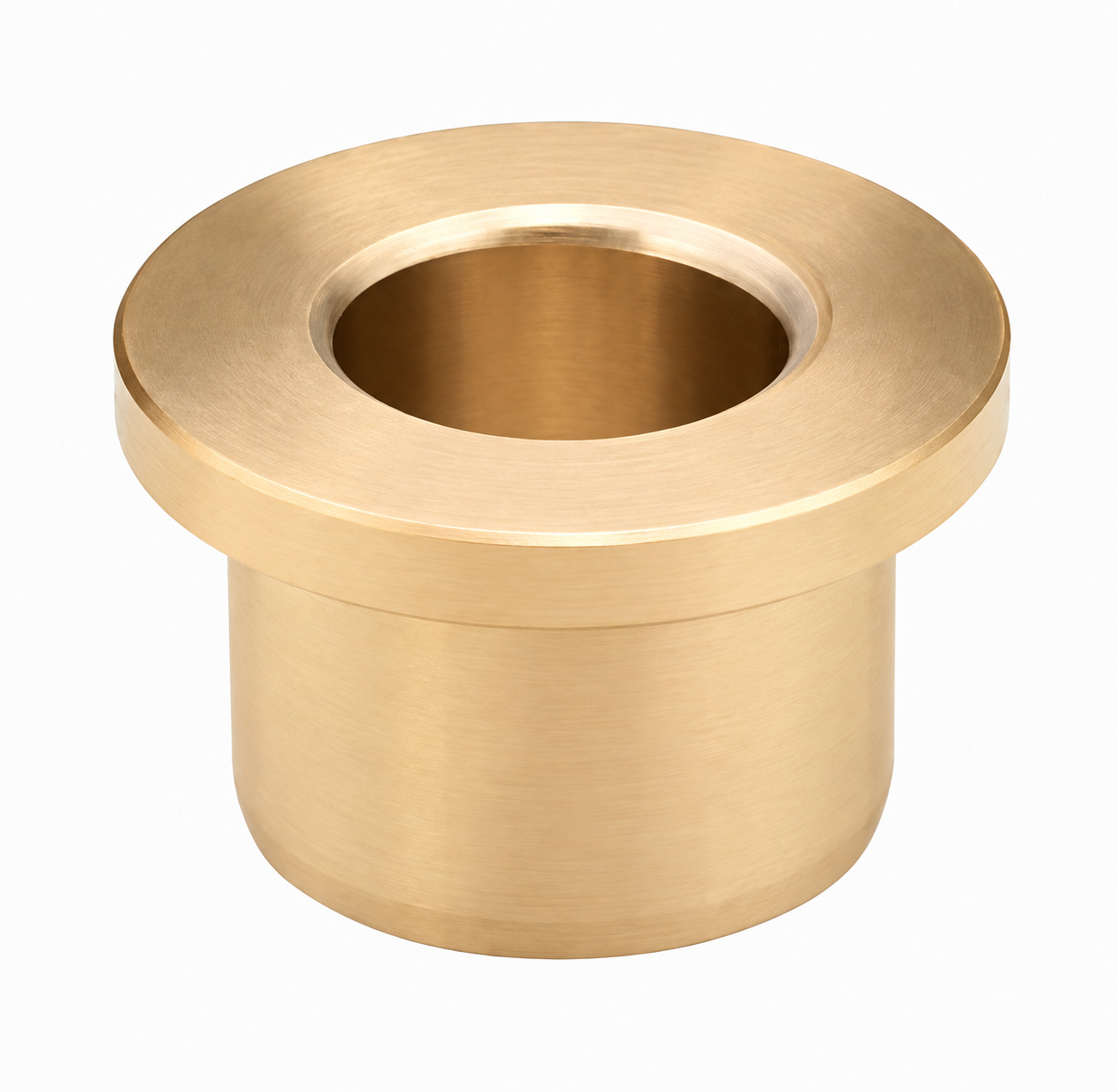
No. It shows a one-piece flanged sleeve construction. The alloy and condition are established by the agreed drawing and procurement requirements.
Can H59 be quoted as the same material?
Keep it as a separate proposal requiring approval. Composition and condition requirements differ, and a substitution needs review of the bearing duty and purchase specification.
Request a drawing-based quotation
Send the drawing, H62 brass specification, quantity and operating details through Contact BONIU. Include any required material documentation and inspection criteria. Material route, manufacturing feasibility and delivery are confirmed in the quotation.