
Countersunk Graphite Wear Plates for Mold Side-Core Slides
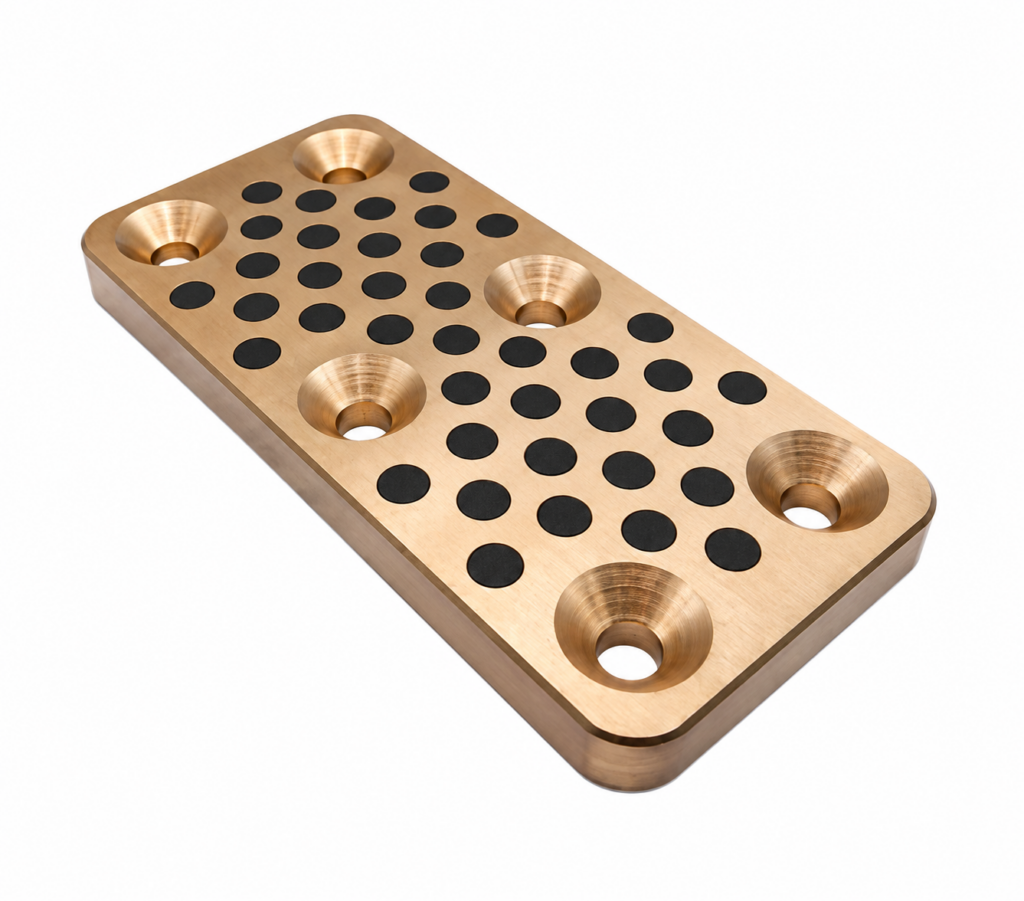
A side-core mechanism moves a mould feature out of the release path. The wear plate provides a replaceable sliding interface beneath or beside the slide, according to the tool drawing. BONIU can review its existing countersunk graphite wear-plate construction against this interface; the enquiry is for the plate rather than a complete slide-core guide unit.
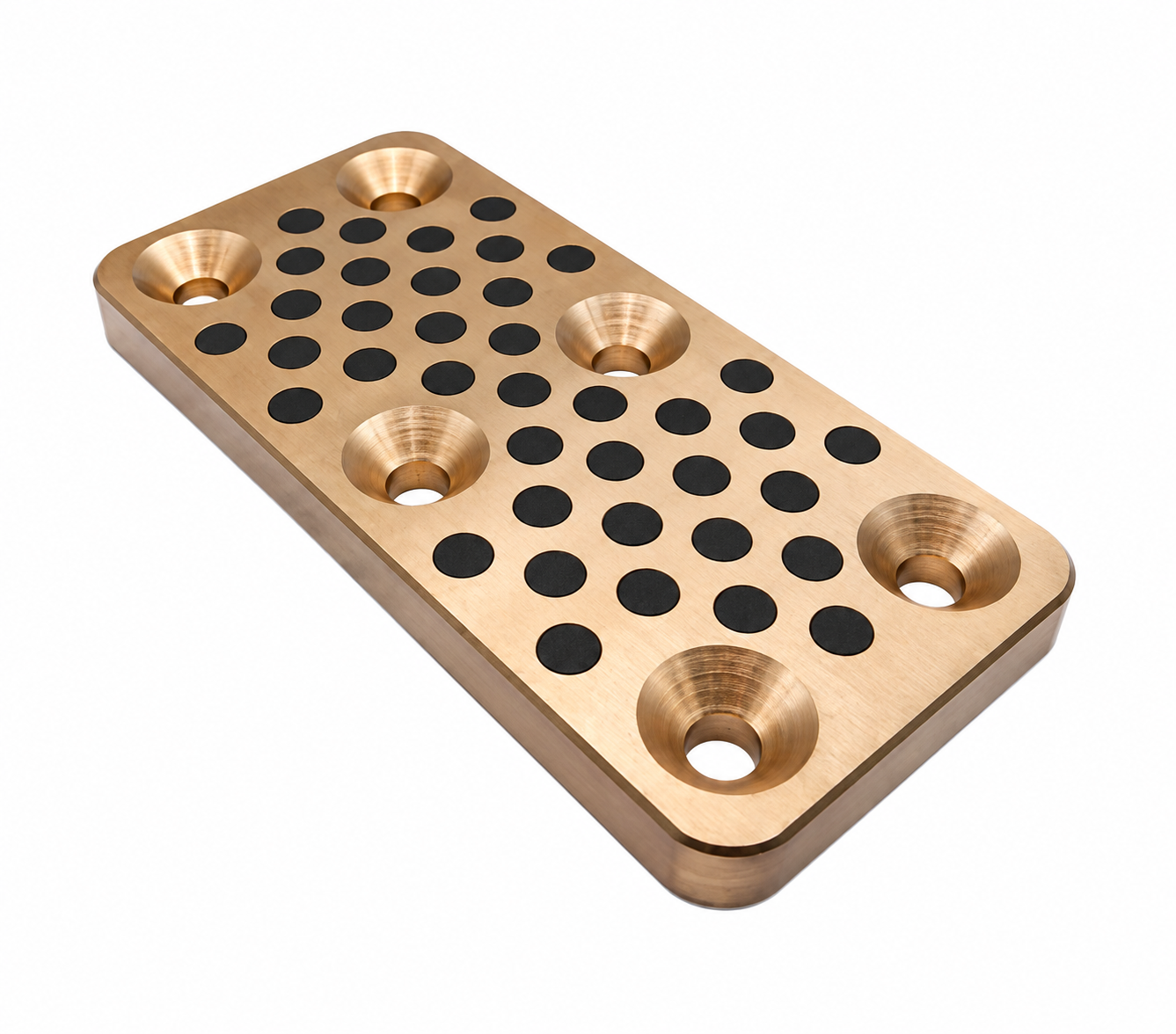
Define the sliding track underneath a side-action core
Side-action travel introduces a swept contact track, end-position reactions and possible thermal differences between the slide and supporting tool steel. Screw heads must clear the moving part, and the plate must be supported where contact pressure is transmitted. A plate cannot replace a locking arrangement that the mould requires during injection.
Start with the matching BONIU product construction. Send the assembly section as well as the individual bearing drawing so that the working contact, locating surfaces and installation access can be reviewed together.
Dimensions and operating data for quotation
| Review item | Required information |
|---|---|
| Contact track | Plate length, width, thickness, slide contact footprint and travel in both directions. |
| Fixing geometry | Hole datums, countersink angle/depth, fastener head dimensions and minimum head clearance. |
| Tool interface | Backing flatness, contact load, operating temperature, graphite pattern and lubrication strategy. |
| Purchase specification | Drawing revision, quantity, units, exact material or composite specification, finish, inspection-document requirements and delivery destination. |
Selection boundaries and installation
Check supporting-face flatness, full seating and fastener clearance before moving the slide. Match the countersink to the specified screw head. Confirm clearances cold and at the design operating condition; do not remove graphite or grind the running surface without an approved revision.
Material and replacement approval
For copper-alloy parts, state the exact standard and grade required by the design. JDB/500# and geometry codes do not establish chemical composition. Do not treat different national alloy designations as interchangeable without checking their specifications. Product colour and a reused image cannot confirm material. Required documentation, dimensions and manufacturing scope are reviewed with the quotation.
The application description is a design-review starting point. No stock availability, service-life guarantee, machine approval, universal load limit or test result is claimed. Contact pressure, motion, temperature, counterface condition and the assembled load path must be checked for the chosen specification.
Purchasing questions
Is the pictured six-hole layout mandatory?
No. It is a construction example; the agreed drawing defines the hole count and coordinates.
Can the plate act as the mould locking wedge?
This page does not offer a locking or complete actuation system. Identify the separate locking and load paths.
Why include the slide footprint with the RFQ?
It shows where load crosses screw holes, edges and graphite plugs during travel.
Can the original product image be used to approve this application?
No. It illustrates the bearing structure. Use the approved part and assembly drawings to confirm dimensions, material, clearance and duty.
Request an application-specific quotation
Send your drawing and the checklist above through the BONIU enquiry page. Identify any proposed substitution explicitly so it can be reviewed before order confirmation.
Related products and engineering content
Base product and construction · Material selection · Related machinery applications · Related technical reading · Product catalogue
Application reference: OILES mould slide-core application overview. This reference supports the general mechanism or selection principle; its product ratings and approvals are not BONIU specifications.