
CuZn25Al5Mn4Fe3 Graphite Wear Plates for Foundry Mould Shuttles
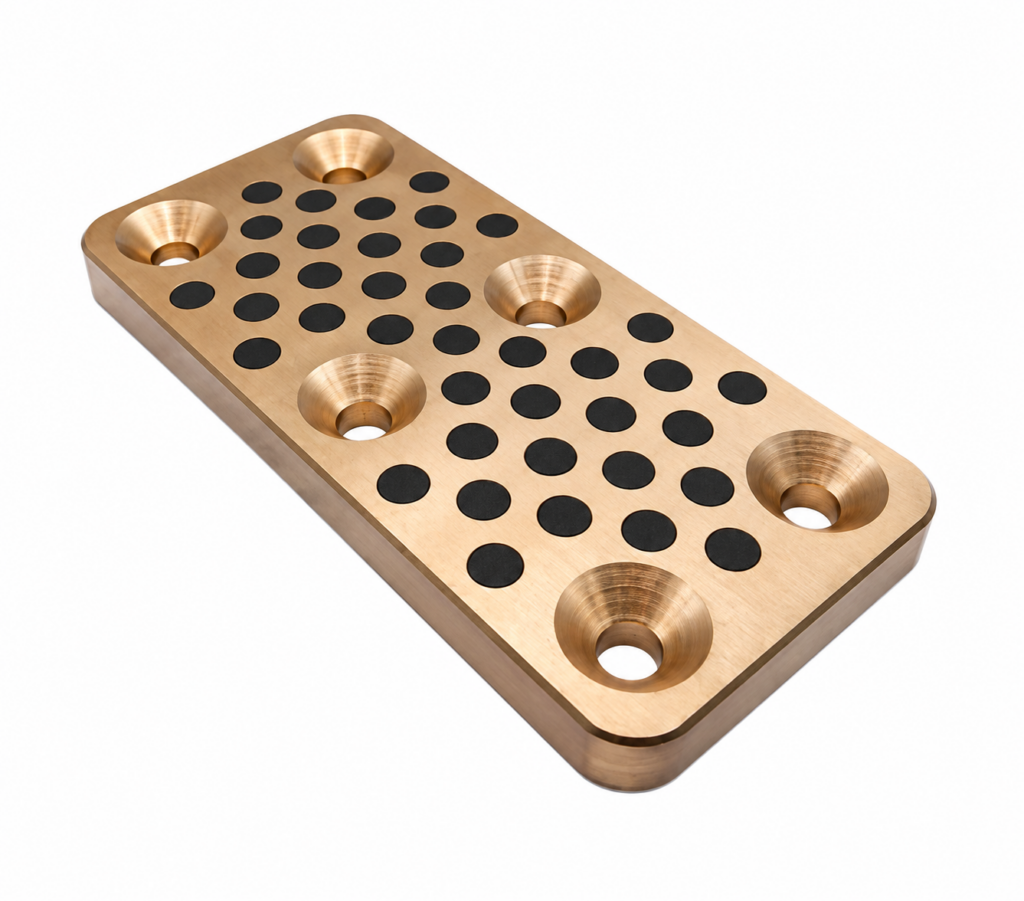
Request a drawing-based quotation for CuZn25Al5Mn4Fe3 high-tensile brass graphite wear plates used on the mechanical guide surfaces of a foundry mould shuttle. The buying requirement is a replaceable flat guide element with a defined load path, fixing pattern and sand-exclusion arrangement. It is separate from mould-facing components that contact molten metal.
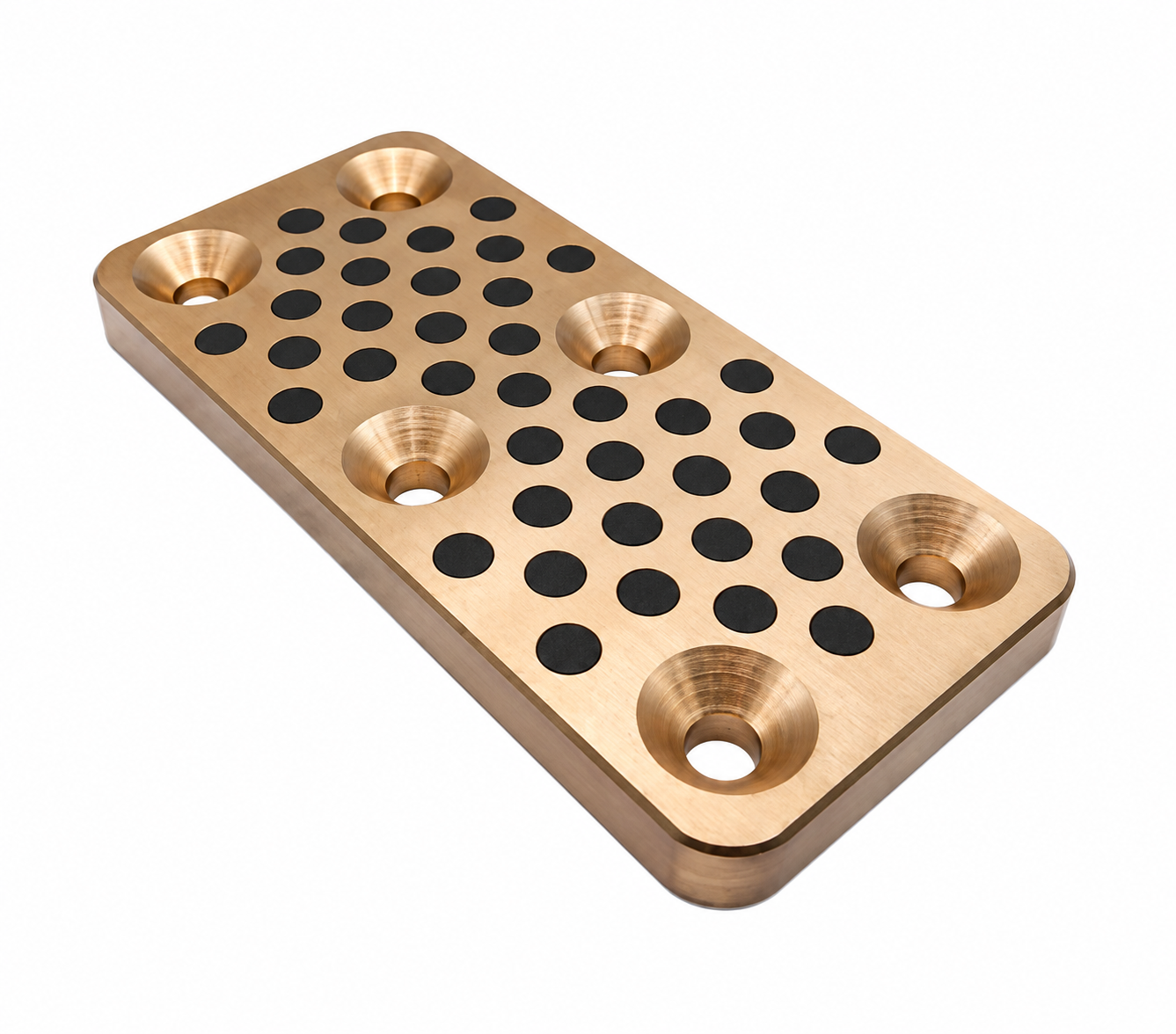
Support the shuttle across the loaded travel
A shuttle can change contact length as it moves between loading and transfer positions. Show the plate overlap at both ends of travel, the normal force on each guide and any overturning moment from an offset mould. A long plate does not guarantee that its entire face carries load. Identify the support behind it, locating shoulders and the sliding counterface so the review addresses edge loading rather than nominal area alone.
CuZn25Al5Mn4Fe3 is the high-tensile brass specification for this enquiry. The term manganese brass describes the material family; it does not authorize substitution with an overseas grade. Graphite plugs are a separate solid-lubricant feature. Their positions must suit the actual swept contact path and avoid countersunk holes, plate edges and locating details. Specify the plug system and commissioning instructions with the alloy.
Sand, heat and graphite require separate decisions
Locate this enquiry at the machine guide, away from the melt-contact face. Provide measured guide temperature, radiant exposure, cleaning practice and the route by which foundry sand reaches the slide. Scrapers, shielding and accessible inspection may be more decisive than changing the alloy. Graphite plugs do not make abrasive debris harmless or establish a universal dry-running temperature. Suitability for the particular thermal cycle and lubricant environment is confirmed with the drawing.
Drawing and quotation checklist
Send a dimensioned new-part drawing with units and revision, the mating assembly and the following application details.
| Review item | Information to provide |
|---|---|
| Plate and datums | Length, width, thickness, working face, flatness, parallelism and locating edges. |
| Fixing and backing | Hole coordinates, countersink angle/depth, screw clearance, seating support and removal access. |
| Contact path | Shuttle stroke, minimum overlap, counterface material/finish, force distribution and moments. |
| Material and lubricant | CuZn25Al5Mn4Fe3 standard/edition, material condition, plug specification and any initial lubricant. |
| Duty and purchase | Guide temperature, sand exposure, cycle rate, quantity, drawing revision and inspection requirements. |
Installation and selection checks
Seat the plate on a clean, supported mounting face. Check that screw heads stay below the working surface and that locating features do not distort the plate when tightened. Verify guide clearance across the full shuttle stroke before loading. Set scrapers and shields without allowing their fasteners to rub on the graphite face. Record initial clearance so later wear checks have a useful reference.
Frequently asked questions
Can an existing bronze shuttle plate be replaced by this brass grade?
Only after the existing material, load, support and lubricant requirements are reviewed. A matching outline is insufficient. Keep a proposed alloy change separate from a like-for-like replacement quotation.
Are graphite plugs the same as oil grooves?
No. Plugs provide a specified solid-lubricant system; grooves route a supplied lubricant. The drawing must identify which construction is required and whether supplementary lubrication is permitted.
What should accompany a worn plate sample?
Send the mating guide dimensions and assembly drawing, including original clearances. Wear can remove the design thickness or hole datum, so a sample alone should not define new-part geometry.
Request a drawing-based quotation
Send the drawing, CuZn25Al5Mn4Fe3 high-tensile brass specification, quantity and operating details through Contact BONIU. Include any required material documentation and inspection criteria. Material route, manufacturing feasibility and delivery are confirmed in the quotation.